Design as a spiritual practice

Jul 15, 2025
2 min read

Over the years, if there’s one thing I’ve truly come to understand, it’s this: You can only extract meaning from something if you believe in something bigger than yourself.
To design is to surrender to something larger. It’s an act of faith-believing that space, form, and light can carry meanings beyond material function.
Spirituality, to me, is the belief that life holds something deeper than what we can see or prove. It's about trusting that there is significance in the invisible, the intangible. Similarly, design is not just the curation of beautiful objects. It's the art of crafting moments that make someone feel something larger than the material elements that
surround them.
An expensive sofa, a stunning wallpaper, or a dramatic chandelier-these can impress. But true design, the kind that lingers, transcends. It moves someone not because of how much it cost, but because of how deeply it connects.
One of the spaces that shaped my understanding of this is the Indian Institute of Management in Ahmedabad, designed by Louis Kahn. Built between 1962 and 1974, it uses humble materials-brick, concrete, light—and yet, it feels monumental. Kahn didn’t rely on ornamentation or spectacle. Instead, he let silence, geometry, and light do the work. His iconic circular openings and massive arches are not just architectural gestures—they’re philosophical. They frame the sky, pull in shadows, and stretch time.
The IIM isn’t a temple, yet it feels sacred. It’s an academic institute used daily by students, professors, visitors- and yet it stirs something inward. That, to me, is spiritual design: spaces that make you feel grounded and elevated at once, that bring a quiet awareness into the everyday.


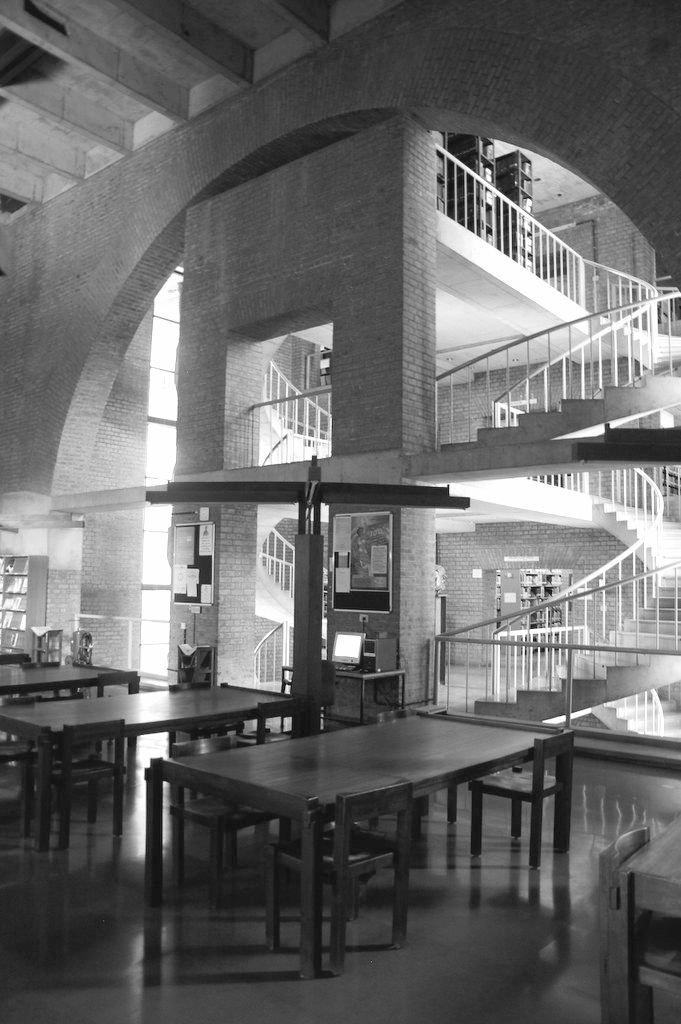
Indian Institute of Management in Ahmedabad, India - Louis Khan


Comments